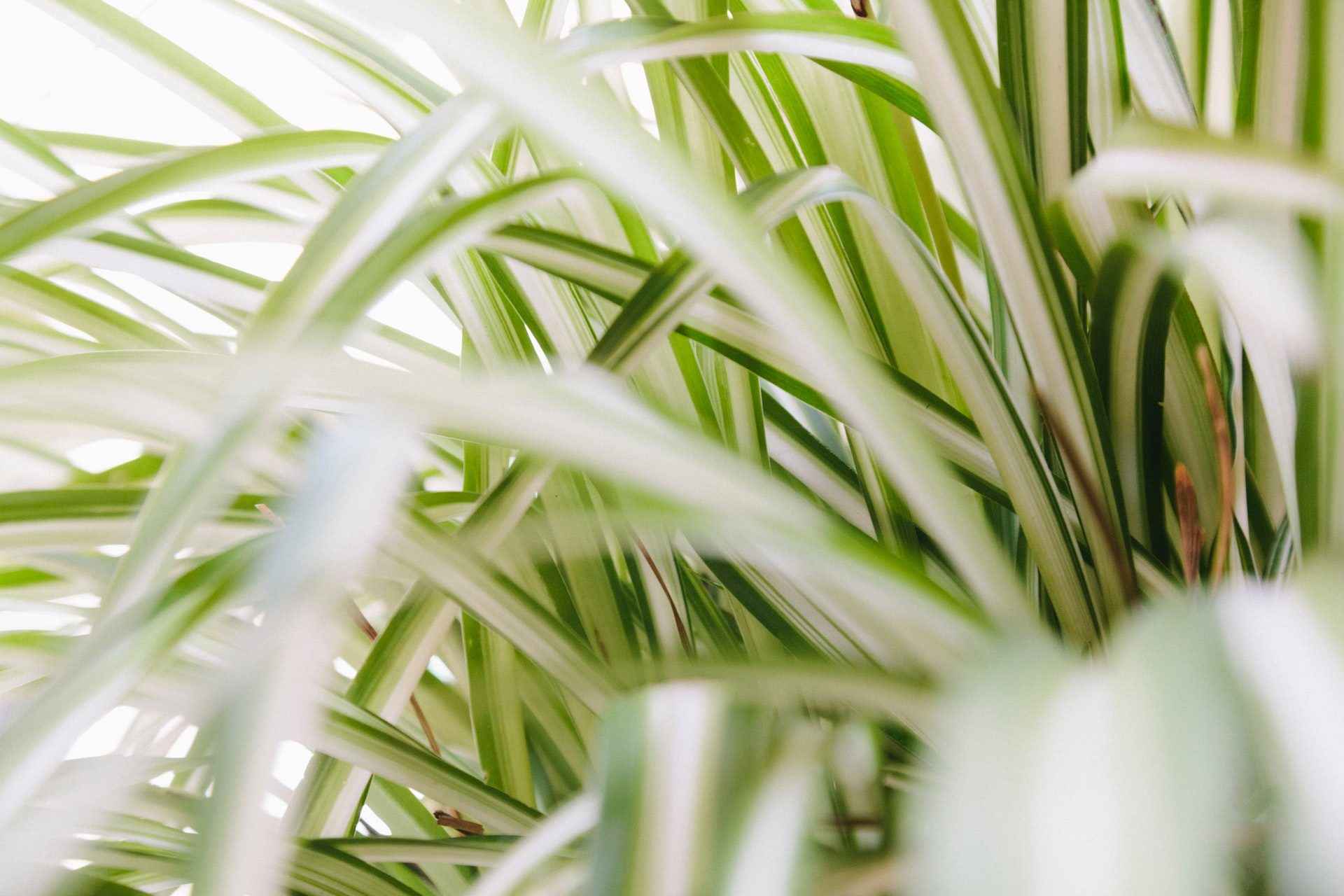
Using Spider Plants in the Lab
ResourceSpider plants are well known for their habit of creating little plantlets that hang down from the parent plant, allowing them to colonise the slopes of the African gorges where they can be found in the wild. In the lab, they are a useful, cheap and reliable resource for investigating photosynthesis, asexual reproduction and the role of plant hormones, and great for stomatal peels.
Practicals
- Stomata: Spider plants make brilliant stomatal peels. They have particularly interesting patterns of stomata, with no stomata along the white stripes, and very regular patterns of stomata along the green stripe, which students find instantly recognisable. Resource: Measuring stomatal density.
- Stomata: Spider plants have chloroplasts present in the guard cells in the white areas of their varigated leaves, making the guard cells green. Looking at the leaves under high power magnification, suitable preparations will show chlorophyllose guard cells against the non-chlorophyllose mesophyll background.
- Photosynthesis: Resource – TLC: An investigation into the separation of photosynthetic pigments. Aspidistra works particularly well but spider plants should also give satisfactory results
- Asexual reproduction: Take cuttings using rooting powder to encourage root growth
- Asexual reproduction: Describe how spider plants reproduce asexually
- DNA: Spider plants are suitable for the SAPS/NCBE PCR technique, and can be contrasted with cress and other brassicas. Resource: Investigating plant evolution with the SAPS / NCBE PCR kit
Teaching Topics
- Asexual reproduction
- Cuttings
- Photosynthesis
- Rooting hormones
- Stomata
Further resources
- Spider plant stomata 40x objective
- Spider plant stomata 10x objective, showing how they line up in an ordered pattern
- Spider plant stomata 4x objective, showing how the lines follow the pattern of variegation
Description
Spider Plant, Chlorophytum comosum variegatum
Originally from the tropical and southern Africa, Chlorophytum comosum is found in a wide variety of habitats, including on the rocky slopes and gorges of Mount Kilimanjaro in Tanzania.
Spider plants have been popular houseplants in the UK since the 19th century, grown for their decorative variegated leaves. More recently, it has been suggested that they can be used for phytoremediation, including potentially for cleaning soil contaminated with cadmium.
Growing and sourcing
Adapted to: A wide variety of habitats in tropical and southern Africa
Obtaining: Purchase adult plants from garden centres.
Propagating: Spider plants prduces plantlets that can be potted alongside the parent plant or encouraged to root in water any time of year. Dip your plantlets in rooting hormone powder to encourage root growth.
Light: This plant prefers semi-shade but it can cope with short spells of bright sunlight. It can also cope with darker classrooms, although Aspidistra is a better choice in such conditions.
Water: Likes regular misting of the leaves. Water at least once a week in spring and summer to keep the compost most at all times. In winter, water more sparingly, allowing the top centimetre of the compost to dry out between waterings.
Temperature: Keep in a warm room.
Fertilising: Add liquid houseplant fertiliser (e.g. BabyBio) to the water every month.
Repotting: Spider plants have tuberous roots for storing water, and as these grow they will force the compost up to the rim of the pot, making it very hard to water, and even crack the pot. Repot them at this point, using a soil-based mixture such as John Innes No. 2.